
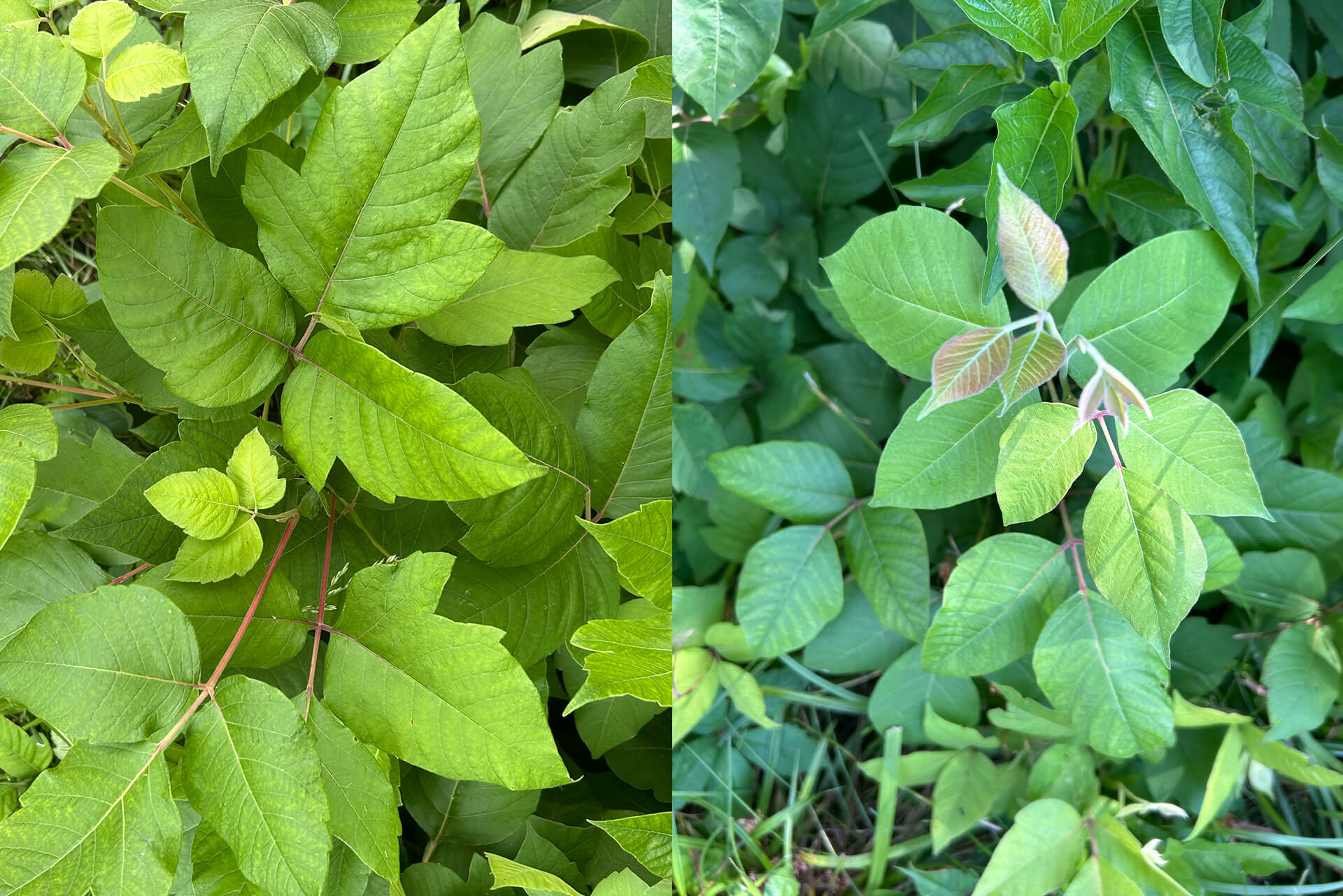
We’ve all been there. You’re clearing brush, raking leaves, or mowing your yard when, all of a sudden, you have an uncontrollable itch on your skin. Then you realize you may have accidentally come in contact with poison ivy. Knowing what poison ivy looks like and how to prevent contact are key. At Choice Physicians Group, we want to give you the knowledge and know-how to steer clear and treat poison ivy if necessary.
Identifying Poison Ivy
It grows as a shrub, and the leaves have three-pointed leaf clusters. They have a glossy surface. The edges of the leaves can be toothed or smooth. Poison Ivy vines have a hairy appearance, which helps them climb. Hence the phrase “hairy vine no friend of mine.”
Why it is an Irritant to the Skin
The sap contains an oil called urushiol. An irritant that causes an allergic reaction and rash. The oil can linger on your gardening equipment, your pet’s fur, or your clothes. Anything that has come into contact with the plant and then your skin can result in irritation, swelling, pain, itching, or blisters. A poison ivy rash may take anywhere from 12 hours to a few days to develop fully. Poison ivy cannot spread from person to person.
Preventative Measures
The best thing to do is dress appropriately by covering as much of your skin as possible before engaging in gardening or any other outdoor activity. Applying a thick layer of ivy-blocking cream before exposure is also a great preventive measure.
- Long-sleeved shirts
- Tuck pants into socks
- Heavy-duty rubber gloves
- Closed-toe shoes
- Utilize APP, Seek by Naturalist to identify poison ivy.
After Exposure
- Rinse with lukewarm, soapy water or rubbing alcohol within an hour of exposure.
- Soak in a cool water bath that has an oatmeal-based product.
- Apply a cold compress to it for 15 to 30 min a day.
- Choice Physicians Group recommends using Zanfel. It is the only product clinically proven to remove urushiol from the skin at any time after an outbreak.
- We also recommend Dawn dish soap as a great option to use for cleaning clothes and skin after exposure to urushiol oil.
At Home Remedies
- Menthol cream: The peppermint will have a cooling effect on your rash.
- Peppermint oil: Be sure to dilute in a lotion so it does not irritate sensitive skin.
- Essential oils: Such as calendula, chamomile, and eucalyptus, may help reduce symptoms.
- Aloe vera gel: This could relieve itching and inflammation. Store in a refrigerator for a cooling effect.
- A 3-to-1 ratio of baking soda to water paste could help relieve itching.
- Witch hazel: Used to soothe itching.
- Apple cider vinegar: Helps dry up the urushiol oil.
Over the Counter Treatments
- Cortisone and calamine lotions can ease the itchiness of the rash.
- Choice Physicians Group recommends Tenu Extreme ointment for severe cases. However, you should wait at least 3 days after using a hydrocortisone ointment before using it.
- A steroid topical cream such as prednisone or triamcinolone is excellent for more severe cases. Both are available by prescription.
- Oral antihistamines can also be taken, such as Claritin and Benadryl or Famotidine (Pepcid)
NOTE: Contact your healthcare provider if a rash or irritation occurs on your face. Poison Ivy, Oak, Zumac can pose problems around the eyes, nose and mouth.
Poison Ivy may take several weeks to clear up from your body, Follow the advice and instructions from your healthcare provider.
(Choice Physicians Group does not recommend using an antihistamine cream on your rash as it could make it worse.)
Our team hopes that the preventive measures, home remedies, and over-the-counter treatment options will be of aid to you this summer. However, if you or someone you know comes into contact with a severe poison ivy rash, please give Choice Physicians Group a call at (913) 544-2248, and we’ll be happy to help you.