
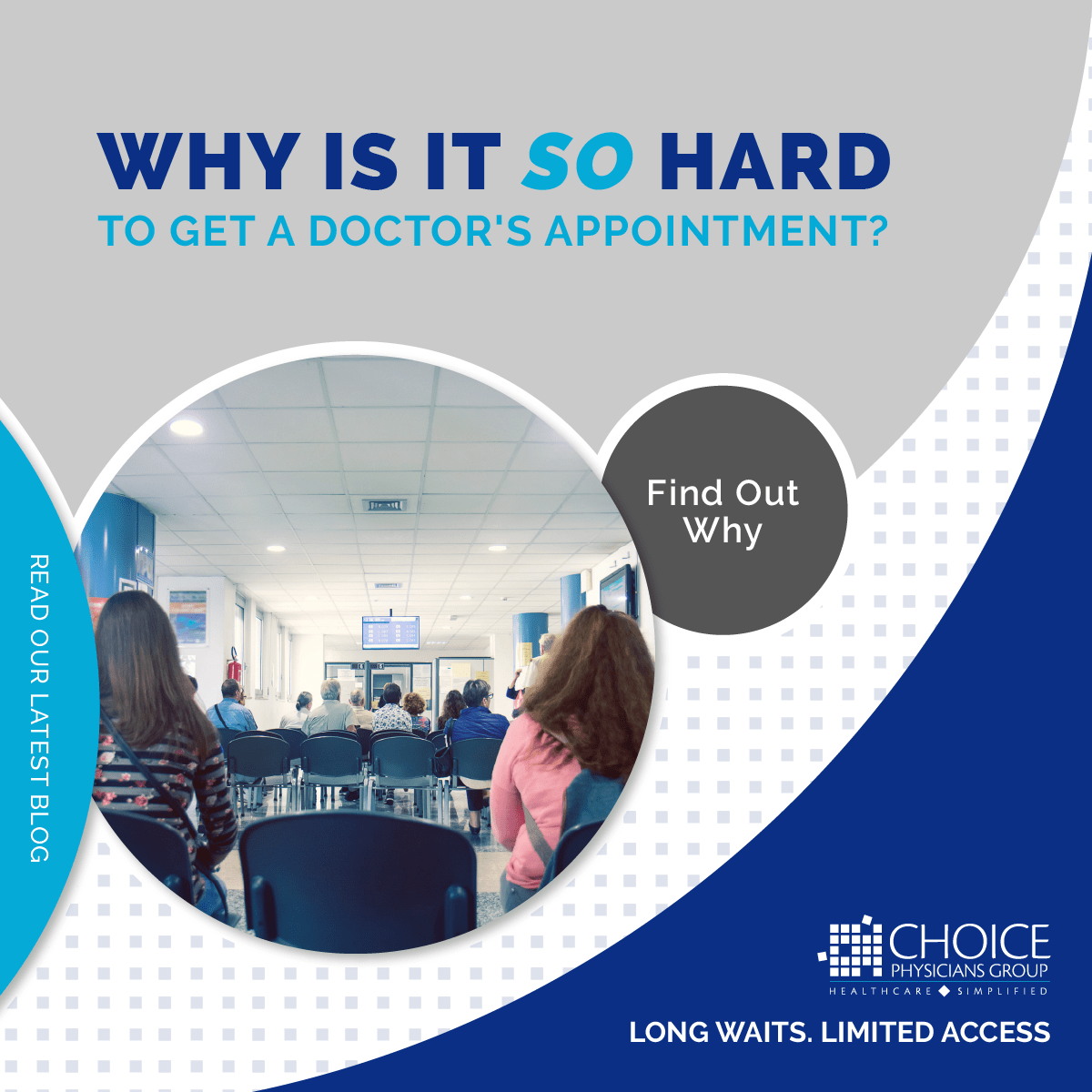
Have you ever called your doctor’s office just to be told the next available appointment is weeks away?
Across the country, patients are finding it harder than ever to get an appointment with their primary care doctor. Whether it’s for an annual checkup, a lingering health concern, or a question you’d like answered sooner rather than later, long wait times have become all too common.
While it may seem like this has become the new normal, understanding why it’s happening can help you make more informed decisions about your care.
Why Is It So Hard to Get a Doctor’s Appointment?
If it feels like it’s taking longer than ever to see a doctor, you’re not imagining it.
There are several reasons it’s becoming more difficult to get timely access to primary care. One of the biggest is a nationwide shortage of primary care physicians. At the same time, more people are relying on primary care than ever before, leaving many physicians responsible for larger patient populations.
A doctor shortage isn’t the only thing contributing to the problem. Insurance paperwork, prior authorizations, and administrative tasks take up a significant amount of time for many medical practices. Unfortunately, that usually means less time available for direct patient care.
The result is something many patients have experienced firsthand: longer wait times, shorter appointments, and difficulty getting care when they actually need it.
How Does This Affect Patients?
When it’s difficult to get an appointment, small health concerns can become bigger problems.
Some people delay getting care because they can’t get in quickly. Others postpone preventative screenings and routine checkups. In some cases, patients end up visiting urgent care or emergency rooms for concerns that could be addressed by their primary care physician.
For many families, the challenge isn’t just finding healthcare, it’s finding care when they need it most.
What Can You Do About Long Doctor Appointment Wait Times?
While challenges like these won’t disappear overnight, there are a few things patients can do to improve their overall healthcare experience.
Establishing a relationship with your primary care physician before a health issue arises can make it easier to receive care when you need it. Staying current with annual wellness visits and preventative screenings can also help identify potential concerns before they become more serious.
It’s important to remember that not every medical practice operates the same way. Some practices are designed to serve a large number of patients, while others focus on providing greater access to their physicians and more personalized care.
How Direct Primary Care Improves Access to Your Doctor
Direct Primary Care (DPC) is changing the way many patients think about healthcare.
Because DPC practices serve fewer patients, physicians can spend more time getting to know the people they care for. That means easier scheduling, longer appointments, and direct access to their doctor when questions or concerns arise.
At Choice Physicians Group, we believe healthcare works best when patients have a strong relationship with their physician. Our goal is to provide accessible, affordable care while helping patients feel heard, supported, and confident about their healthcare decisions.
If you’re looking for a more personal approach to healthcare, learn how Direct Primary Care at Choice Physicians Group helps patients spend less time waiting and more time focused on their health.